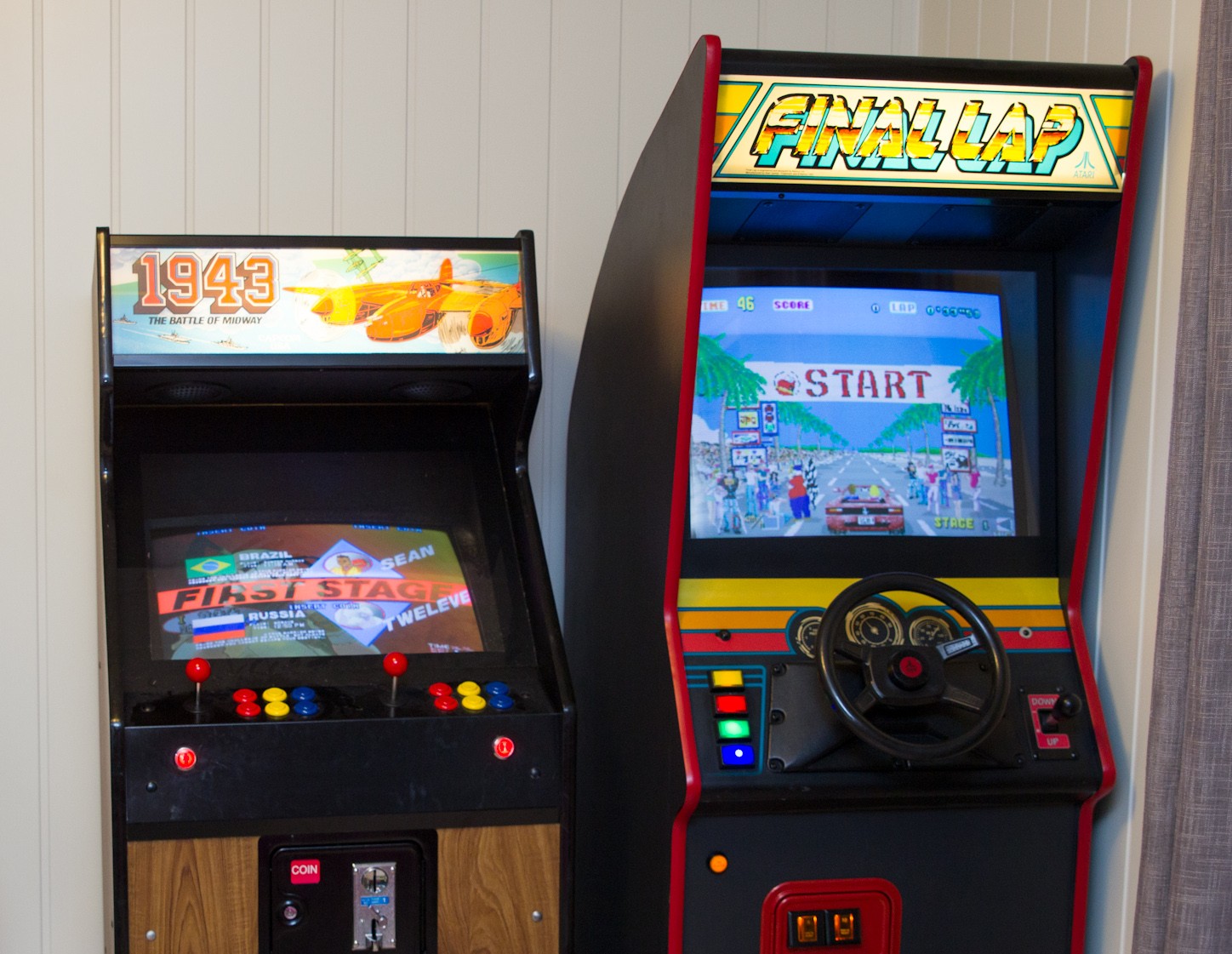
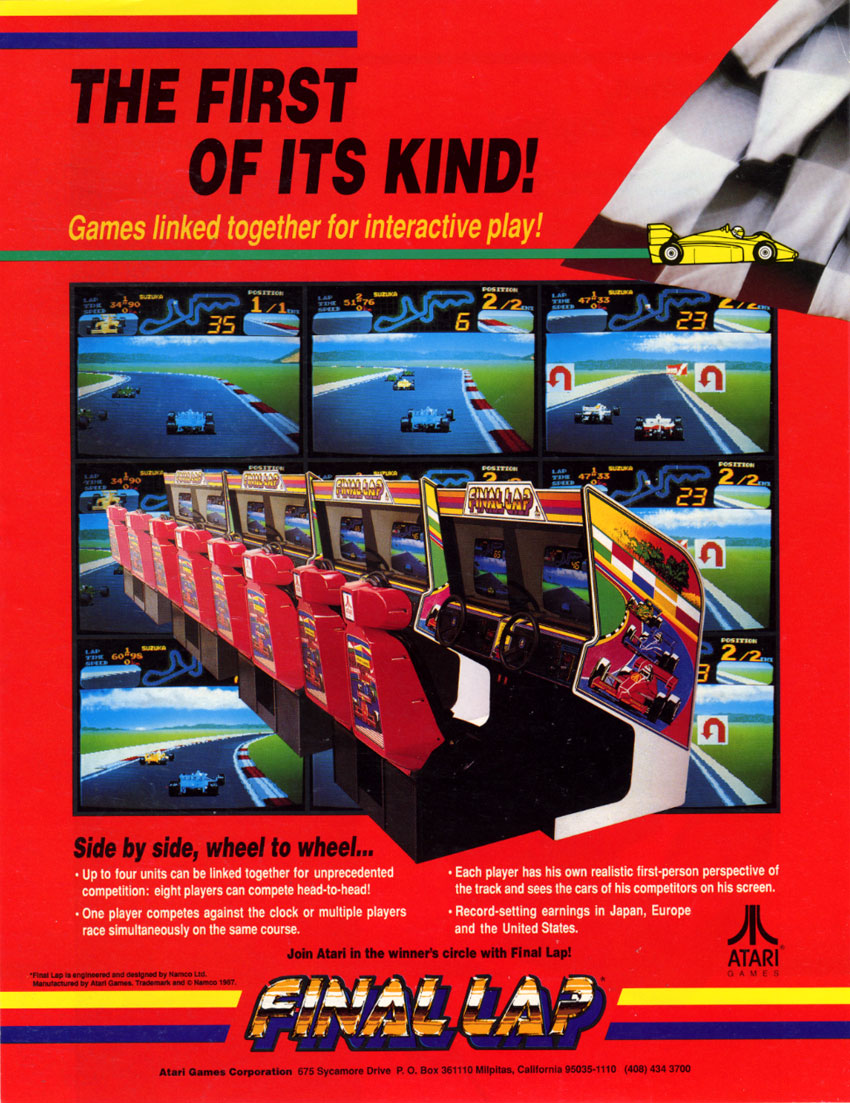
Released 1987/88: Final Lap is a racing video game developed by Namco and released in Japan in 1987. It supported uptil eight simultaneously players in network and was maybe the first racing game with the “rubber band effect”, meaning the player in lead will never be way to far ahead of the other players.
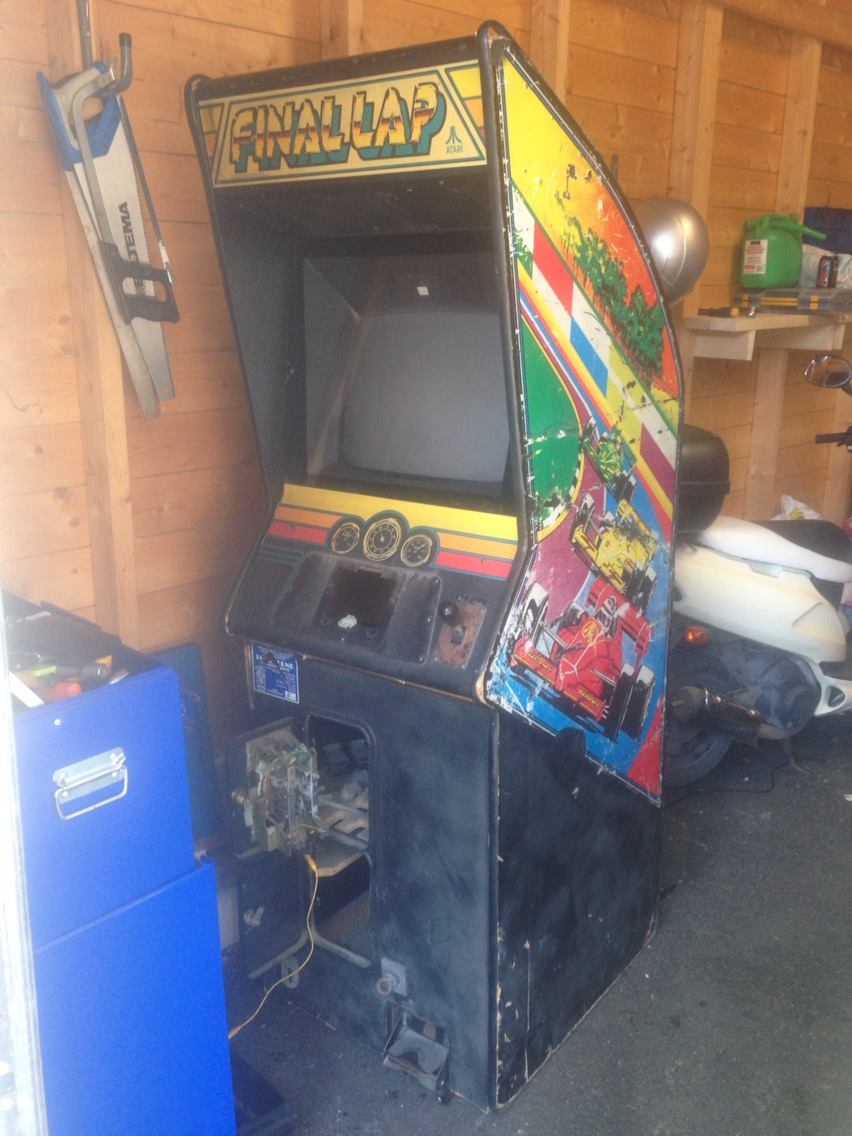
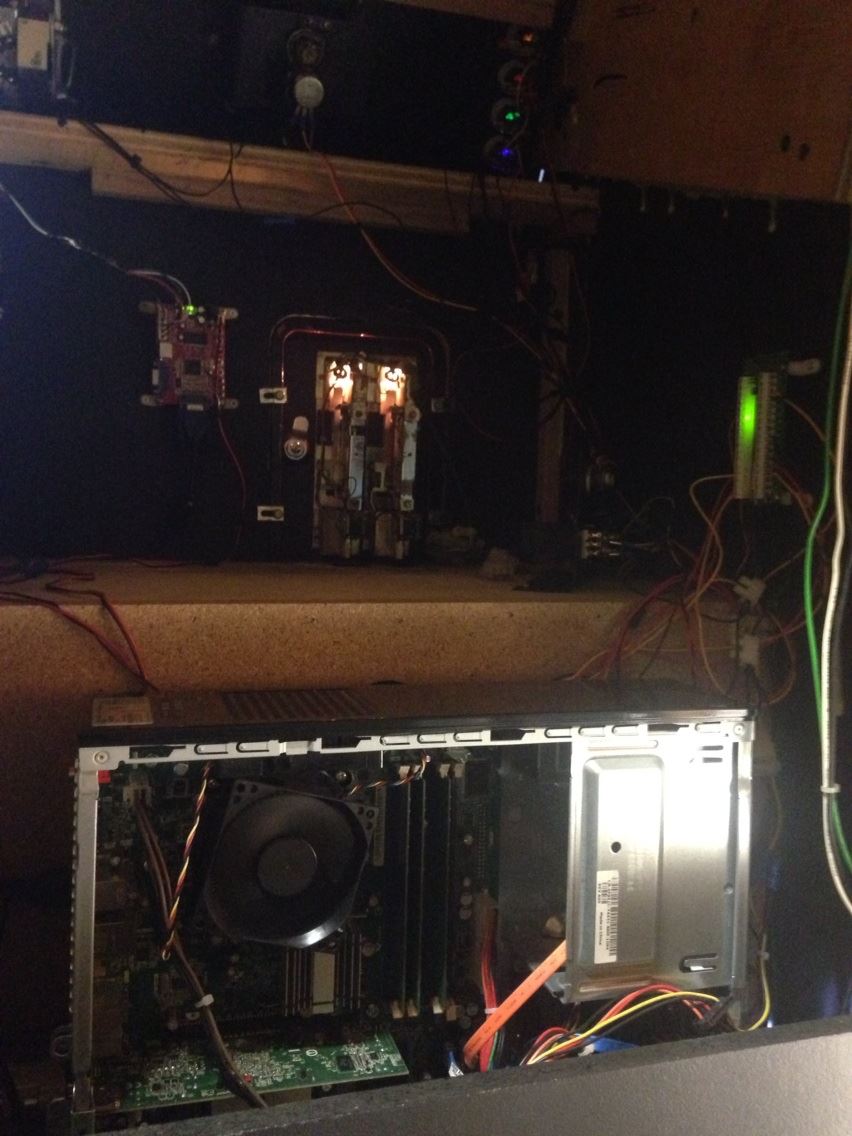
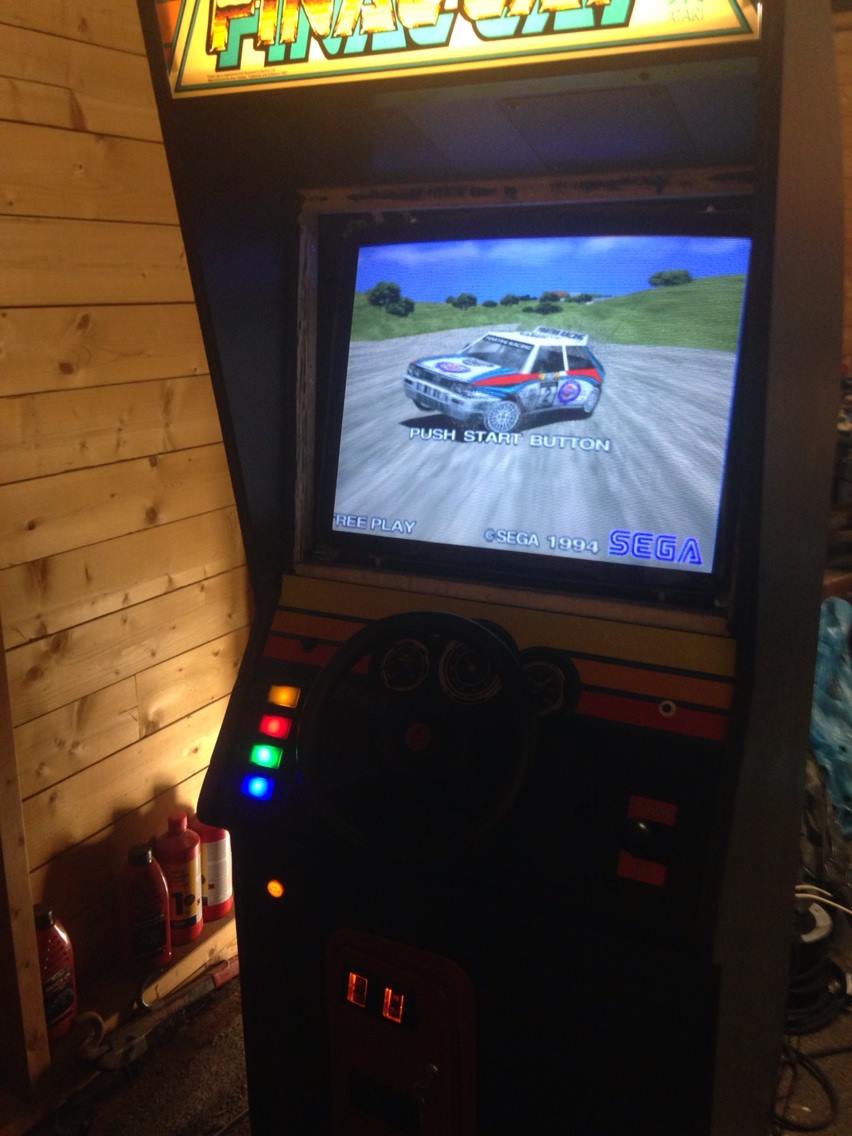
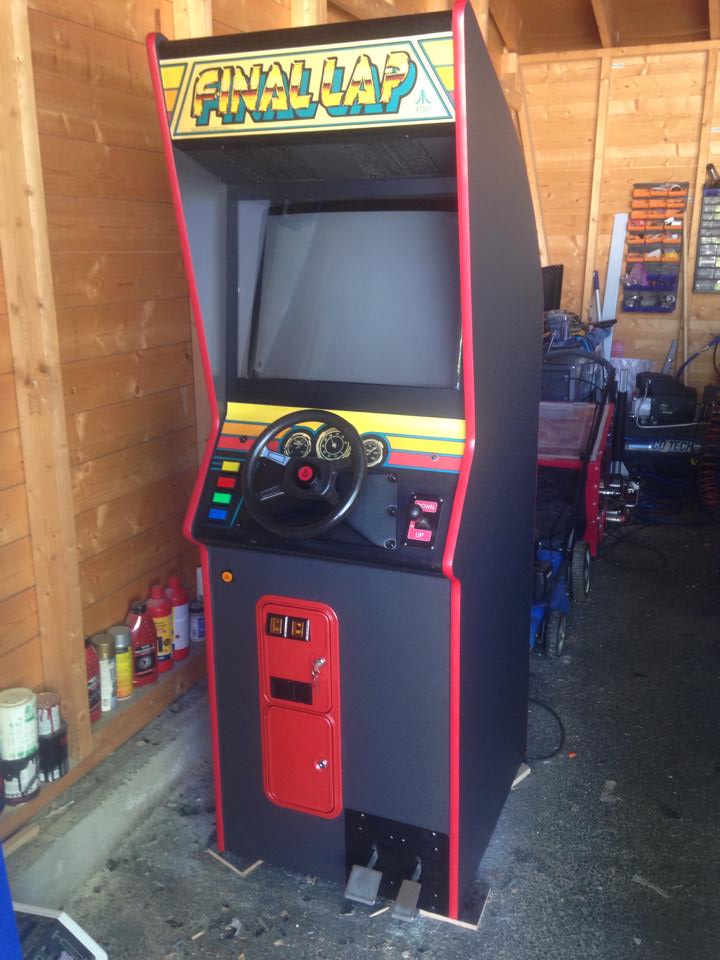
My Final Lap and restoration: This cabinet was really beaten up when I got it and was restored as a general driving cab instead of the original. It’s now setup with modern PC hardware to emulate all sorts of arcade racing games. Emulators like MAME (Multi Arcade Machine Emulator) uses the original arcade ROM’s, stored as image files on harddrive. An 25″ CRT picture tube has replaced the original 19″ arcade monitor, I’m still using RGB connection for video signal.
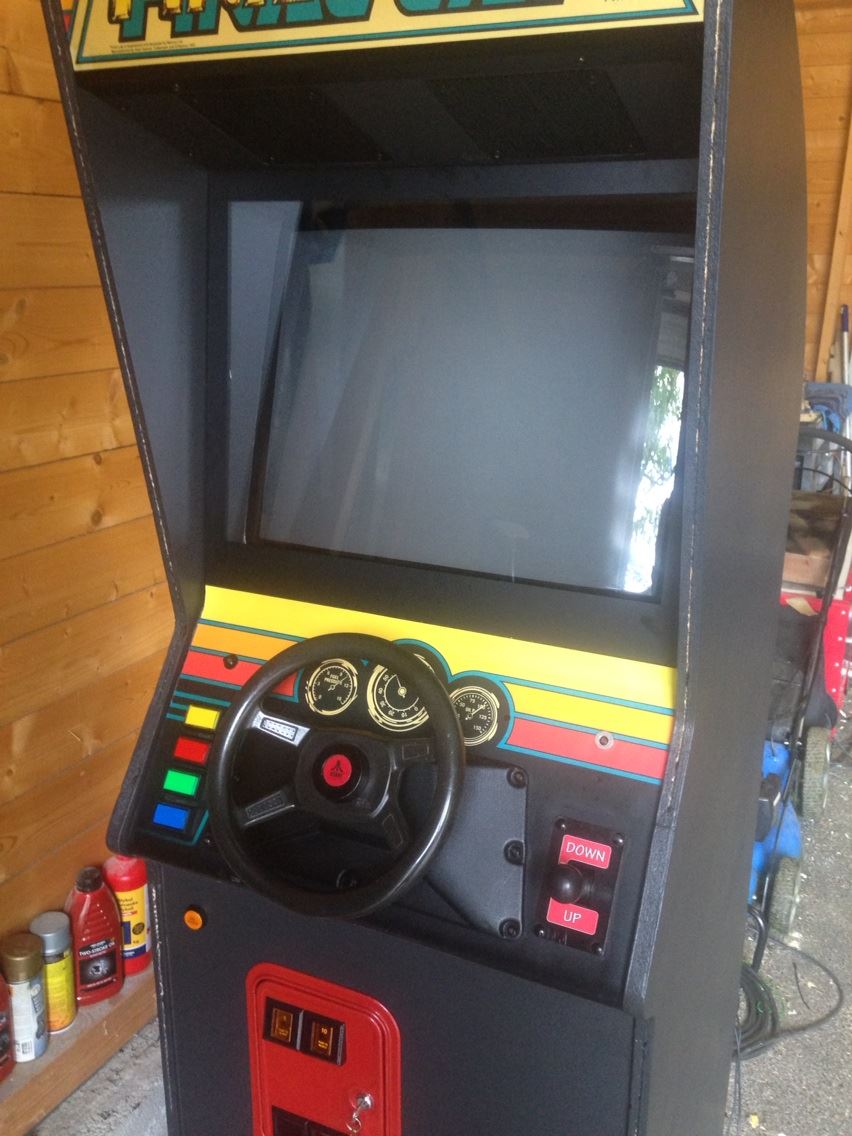
My rebuilt Final Lap cabinet
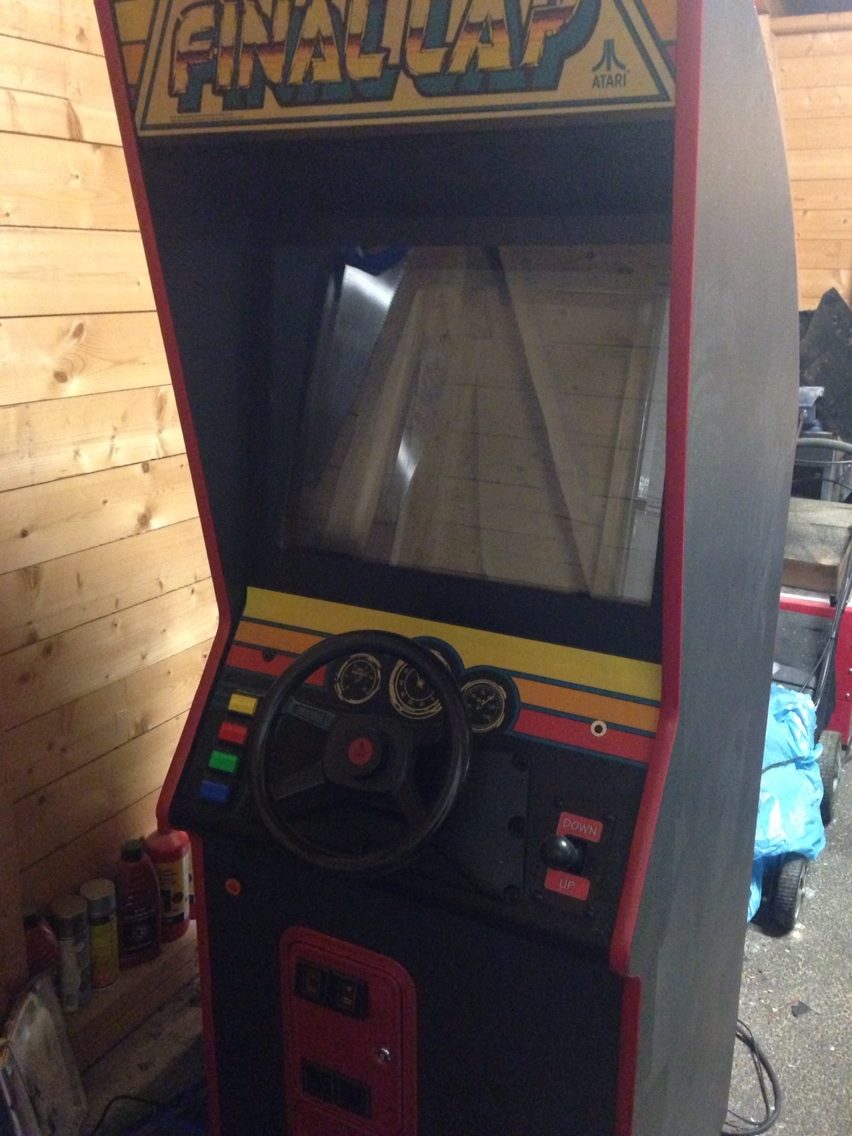
Before the rebuild.
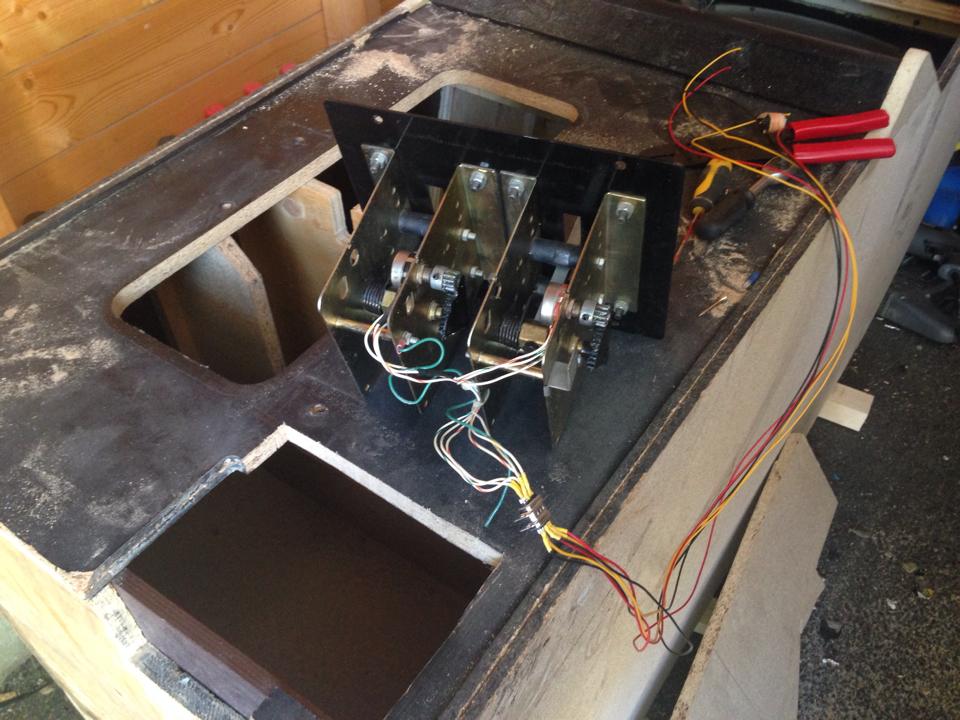
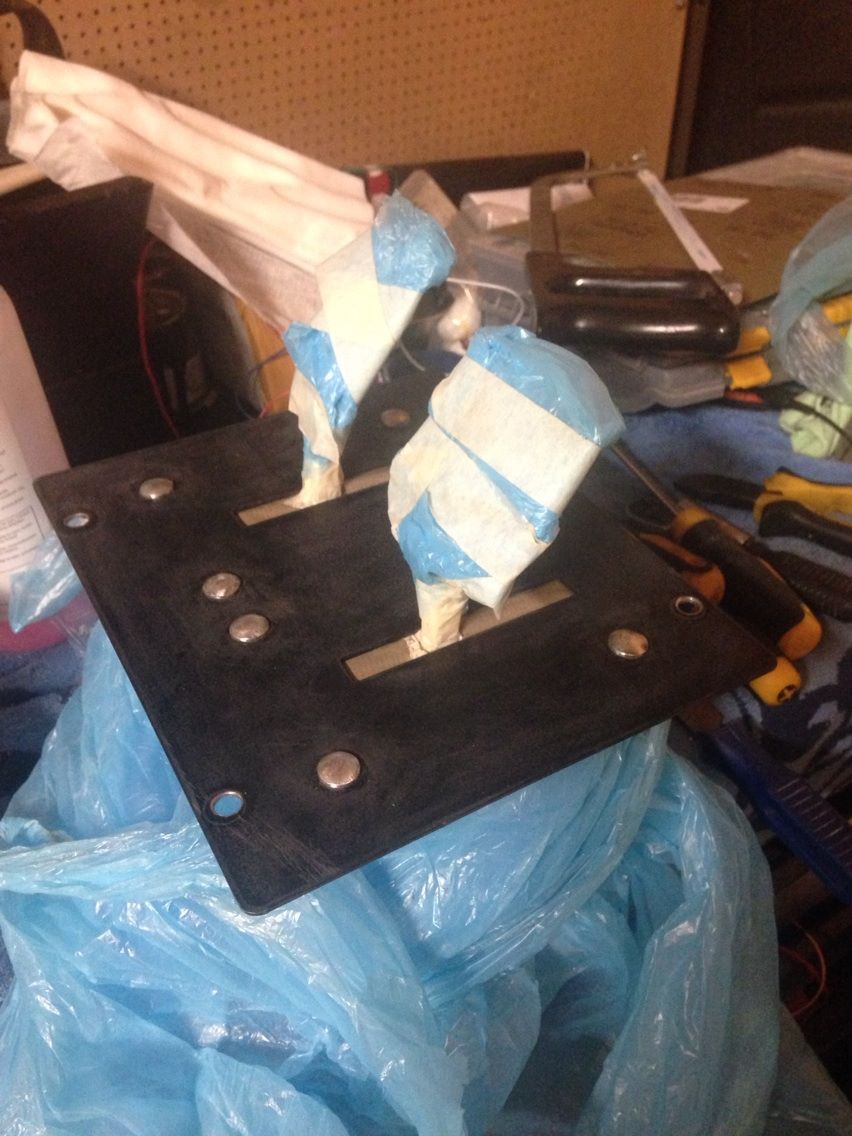
Installed a pedal cluster with two pedals, original had only a single pedal.
A lot of sanding.
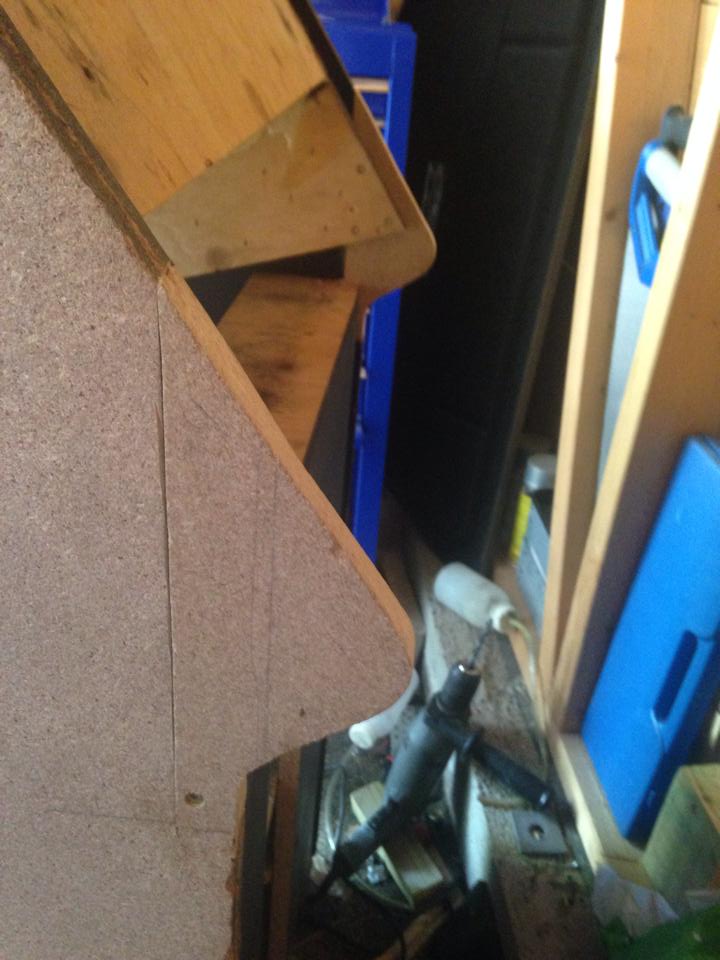
Replacing a lot of broken wood. Fitting new pieces with reinforcement on the inside.
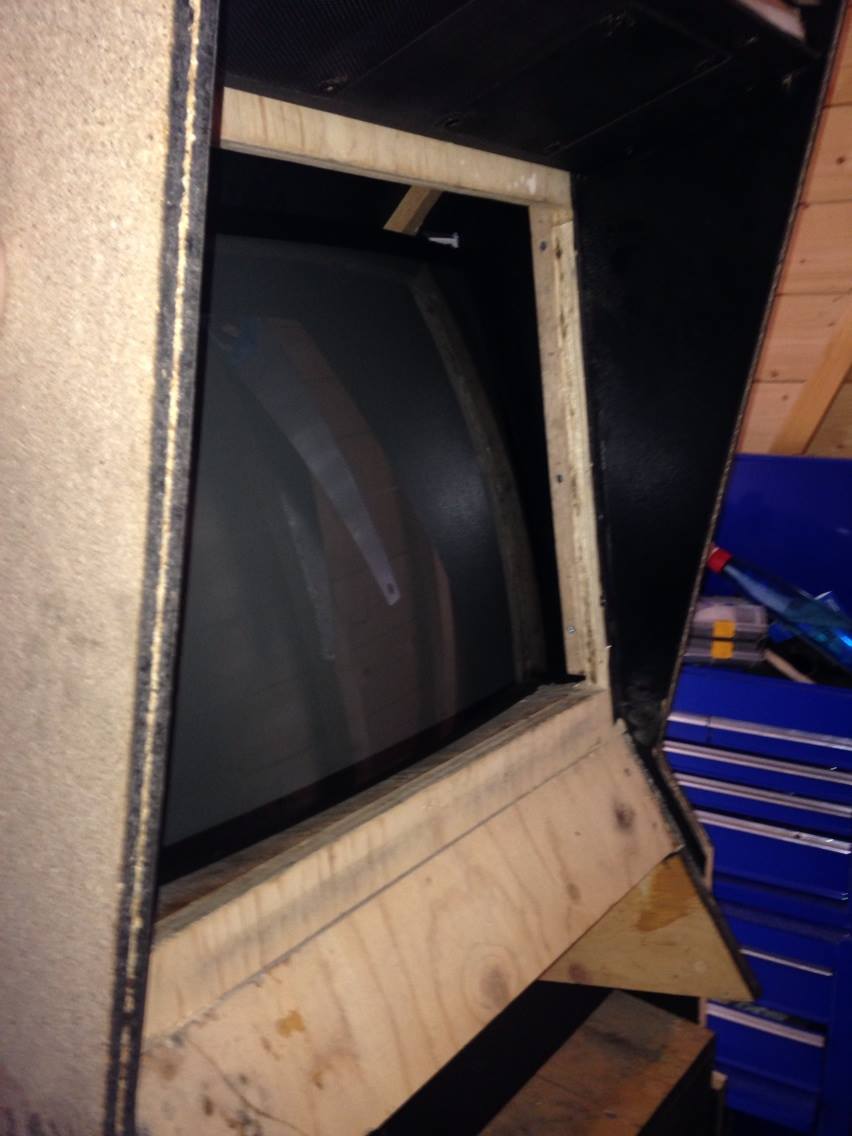
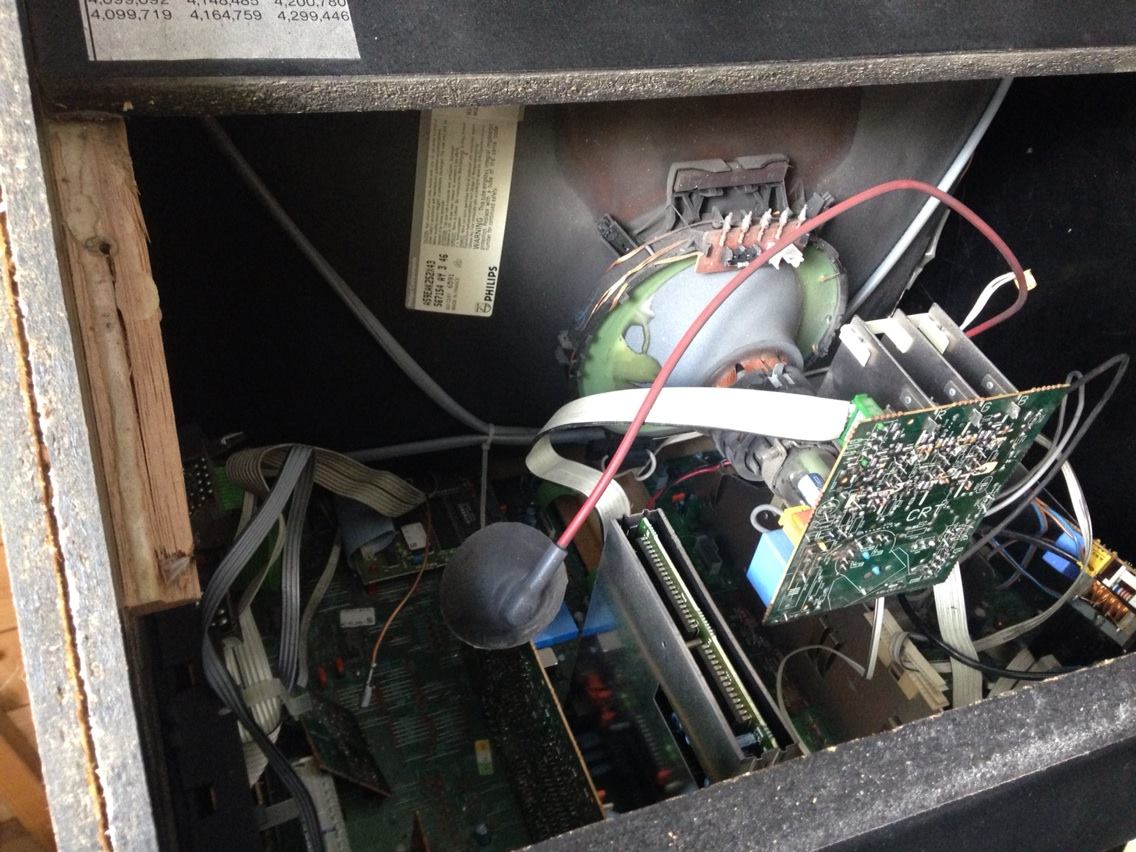
Fitting a 25″ CRT tube from a donor TV set.
Replacing broken wood in the corners with new pieces.
paining the “new” pedal cluster.
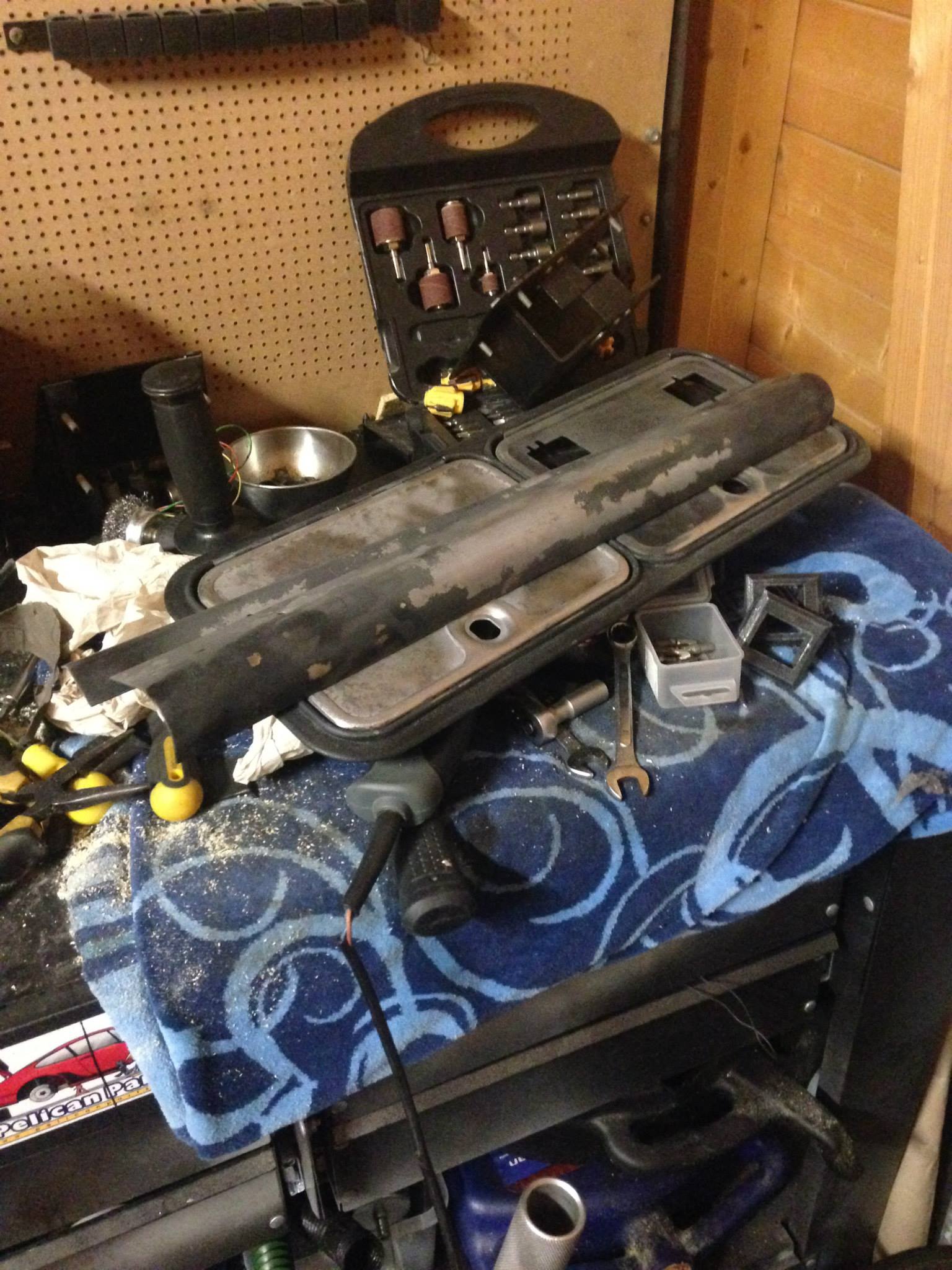
Sanding the coin doors and metal lists for painting.
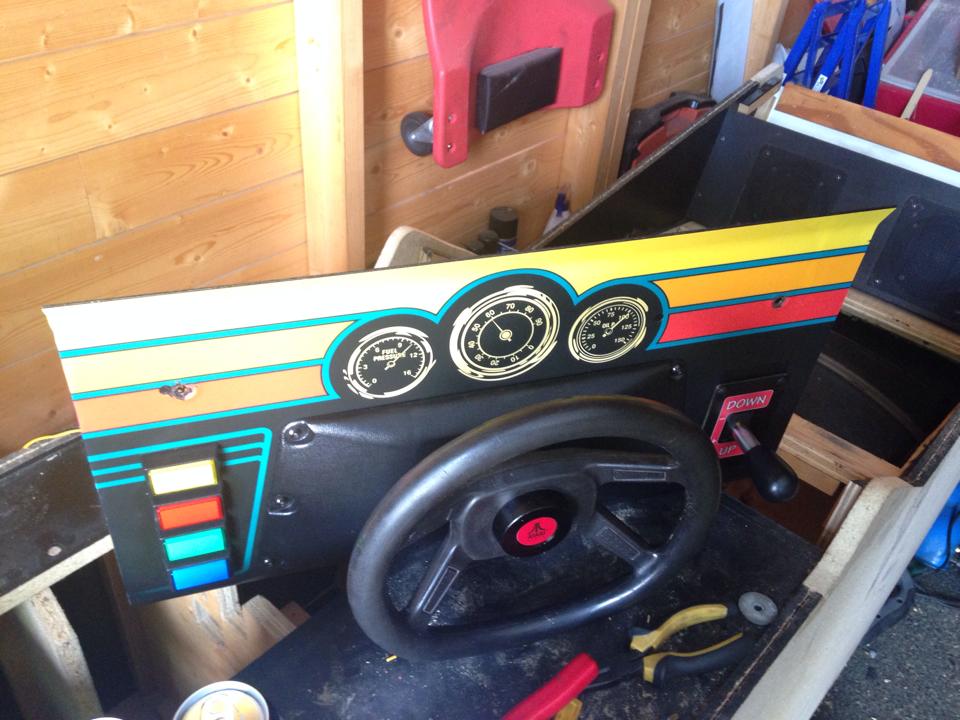
Drilling out holes for “view”-buttons.
“View-buttons”, steering wheel and a “two-switch” auto-center shifter in place.
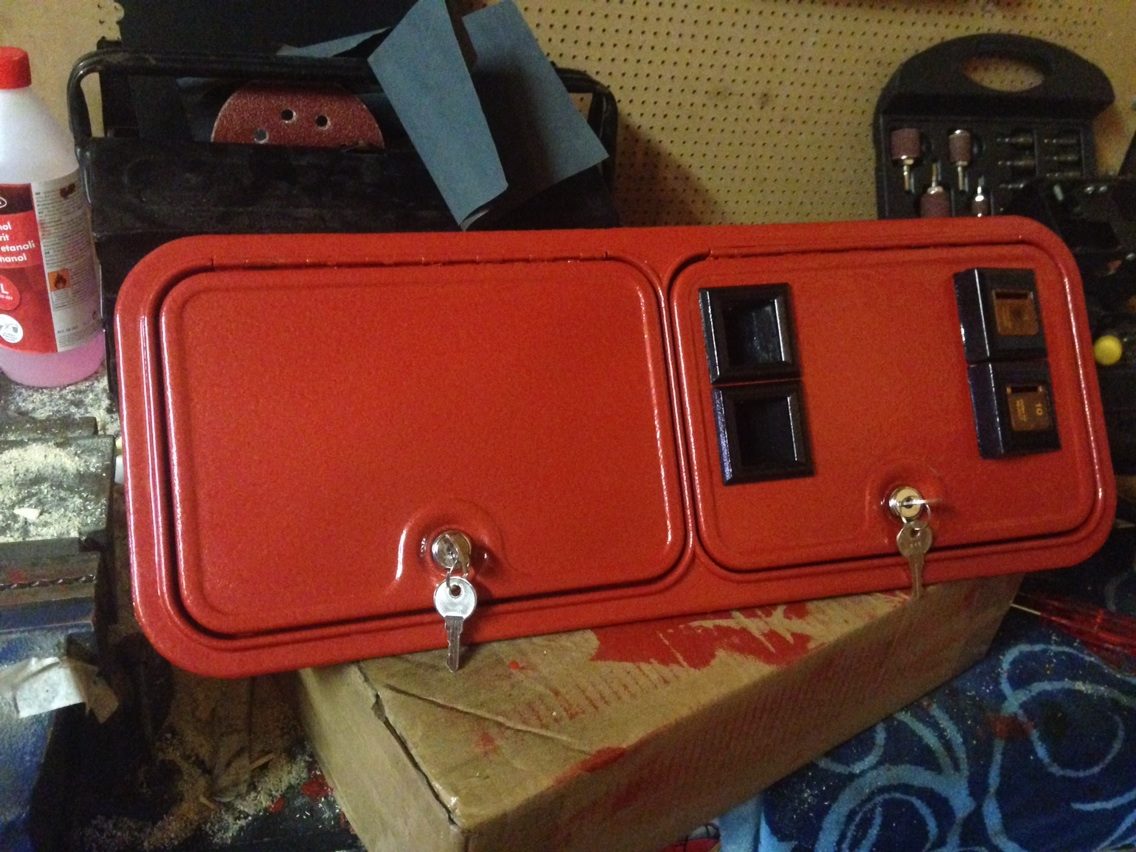
Coin doors painted.
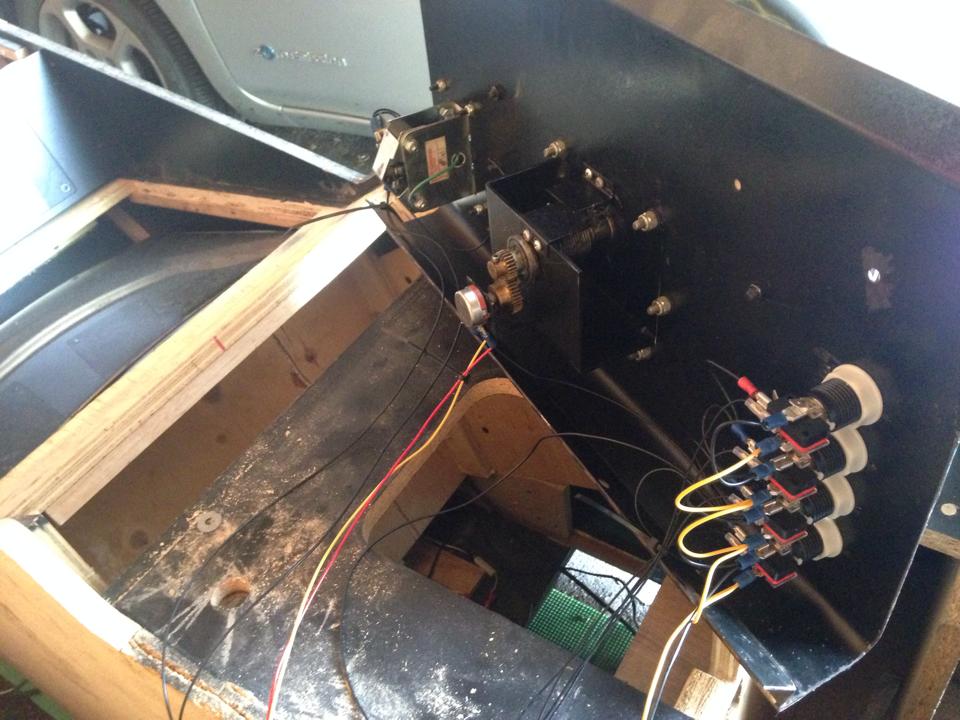
Backside of the control panel, also fitted a new 270 degree potensionmeter.
Testing the 25″ CRT screen.
25″ CRT screen fitted.
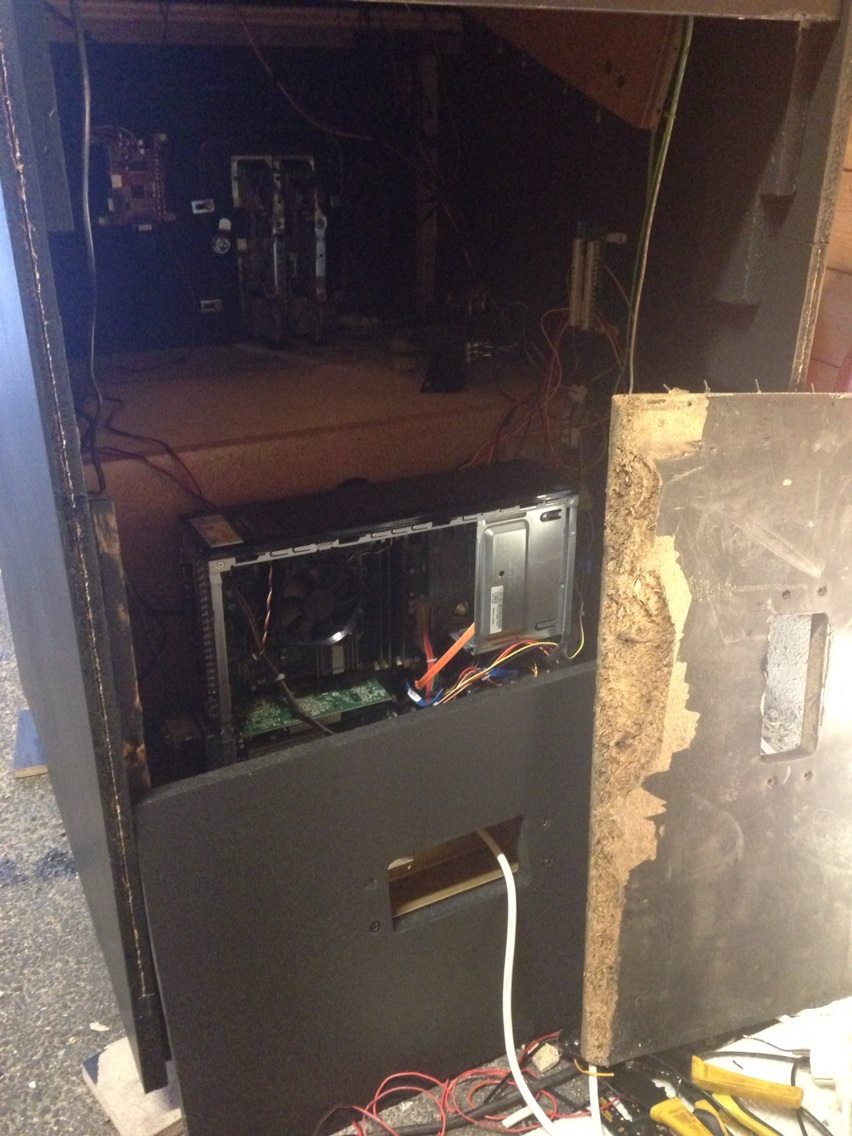
Hardware inside.
New rear hatch plate compared with the old.
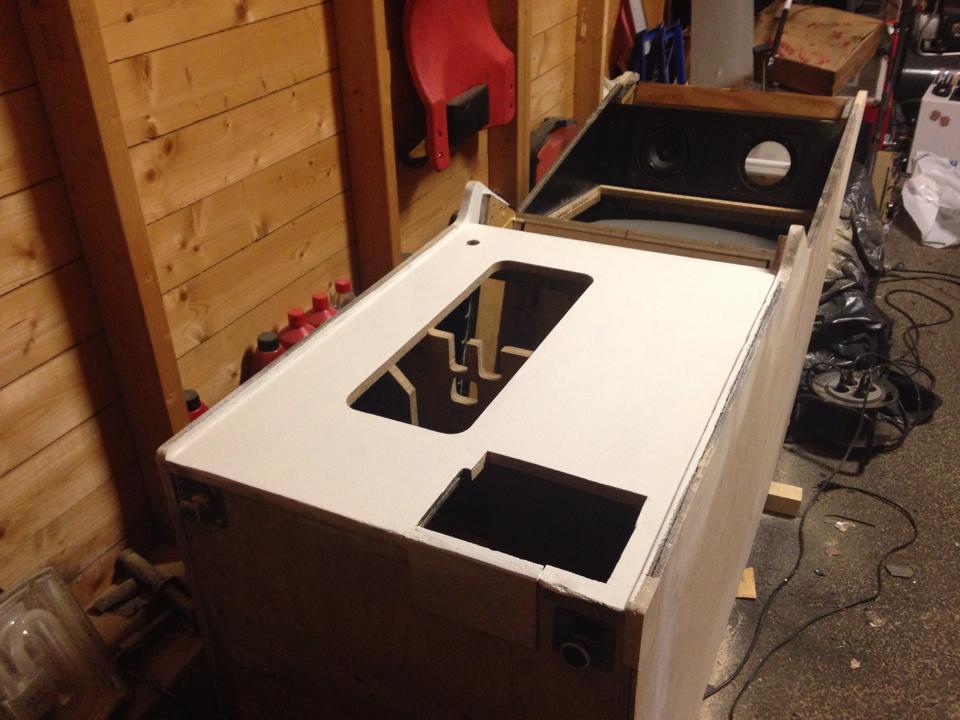
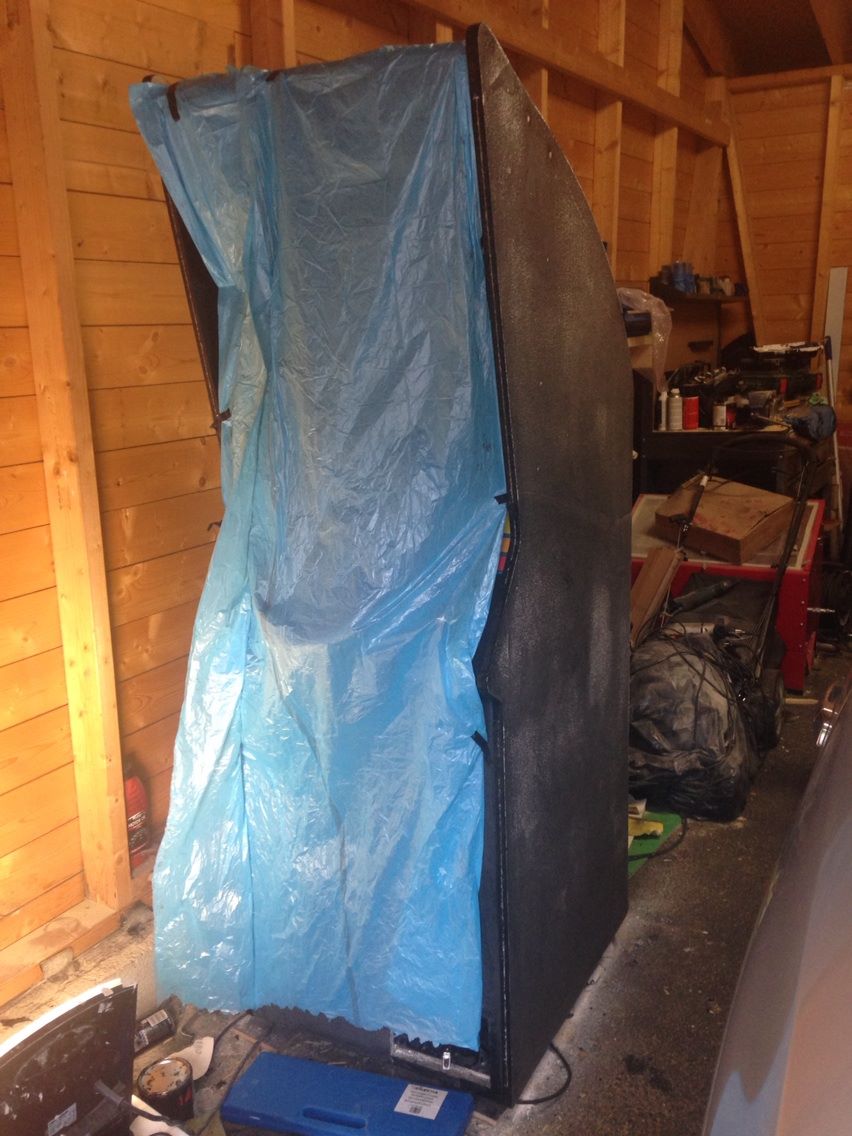
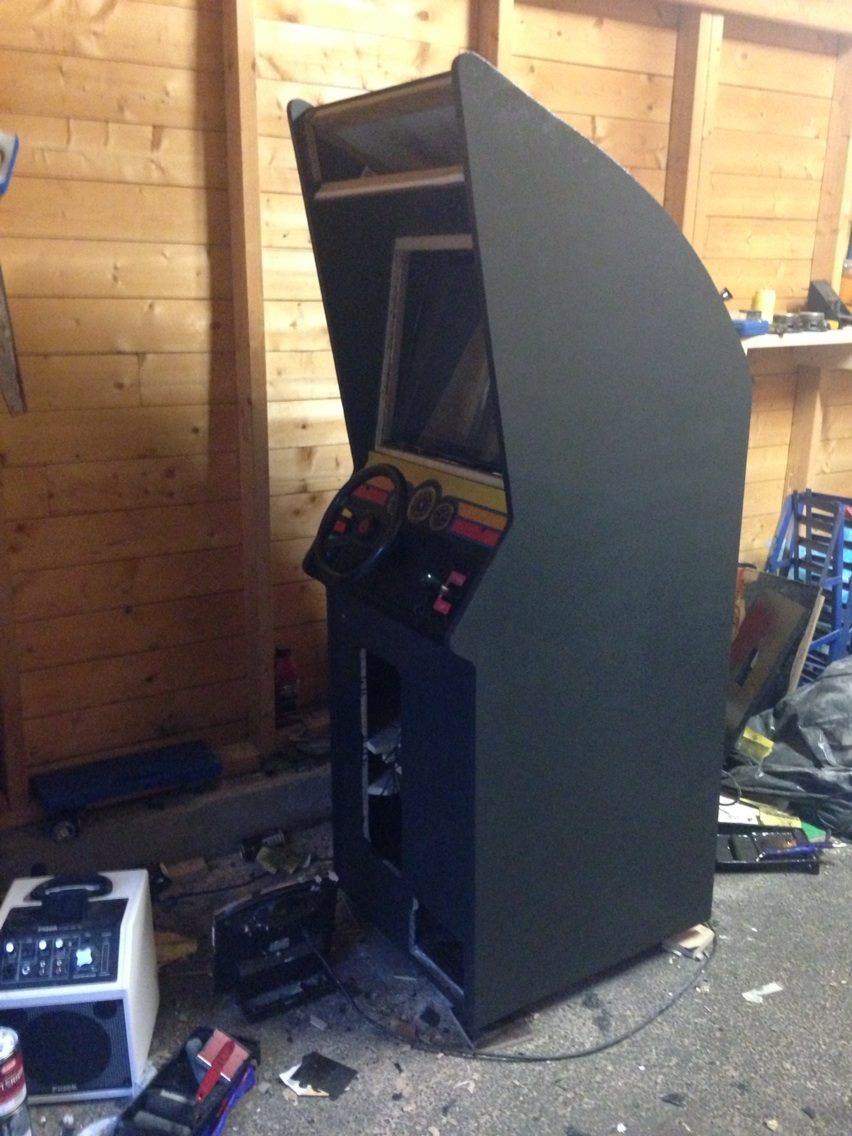
Sanding and painting.
Masking up for sanding and painting.
Starting to getting somewhere.
I used a cutout Plexiglas with black foil in front of the screen.
Testing the controls.
Mounting the t-molding.
T-molding in place.
All finished.
Final Lap arcade supported up to 8 players at once.
Upright twin machine.
Final Lap art.
Final Lap
Remi Jakobsen
I'm collecting classic computers and video games, stretching from the 70's into the 90's. Restoration, history, usage ...
Contains information related to marketing campaigns of the user. These are shared with Google AdWords / Google Ads when the Google Ads and Google Analytics accounts are linked together.
90 days
__utma
ID used to identify users and sessions
2 years after last activity
__utmt
Used to monitor number of Google Analytics server requests
10 minutes
__utmb
Used to distinguish new sessions and visits. This cookie is set when the GA.js javascript library is loaded and there is no existing __utmb cookie. The cookie is updated every time data is sent to the Google Analytics server.
30 minutes after last activity
__utmc
Used only with old Urchin versions of Google Analytics and not with GA.js. Was used to distinguish between new sessions and visits at the end of a session.
End of session (browser)
__utmz
Contains information about the traffic source or campaign that directed user to the website. The cookie is set when the GA.js javascript is loaded and updated when data is sent to the Google Anaytics server
6 months after last activity
__utmv
Contains custom information set by the web developer via the _setCustomVar method in Google Analytics. This cookie is updated every time new data is sent to the Google Analytics server.
2 years after last activity
__utmx
Used to determine whether a user is included in an A / B or Multivariate test.
18 months
_ga
ID used to identify users
2 years
_gali
Used by Google Analytics to determine which links on a page are being clicked
30 seconds
_ga_
ID used to identify users
2 years
_gid
ID used to identify users for 24 hours after last activity
24 hours
_gat
Used to monitor number of Google Analytics server requests when using Google Tag Manager
1 minute
You can find more information in our Cookie Policy and .